
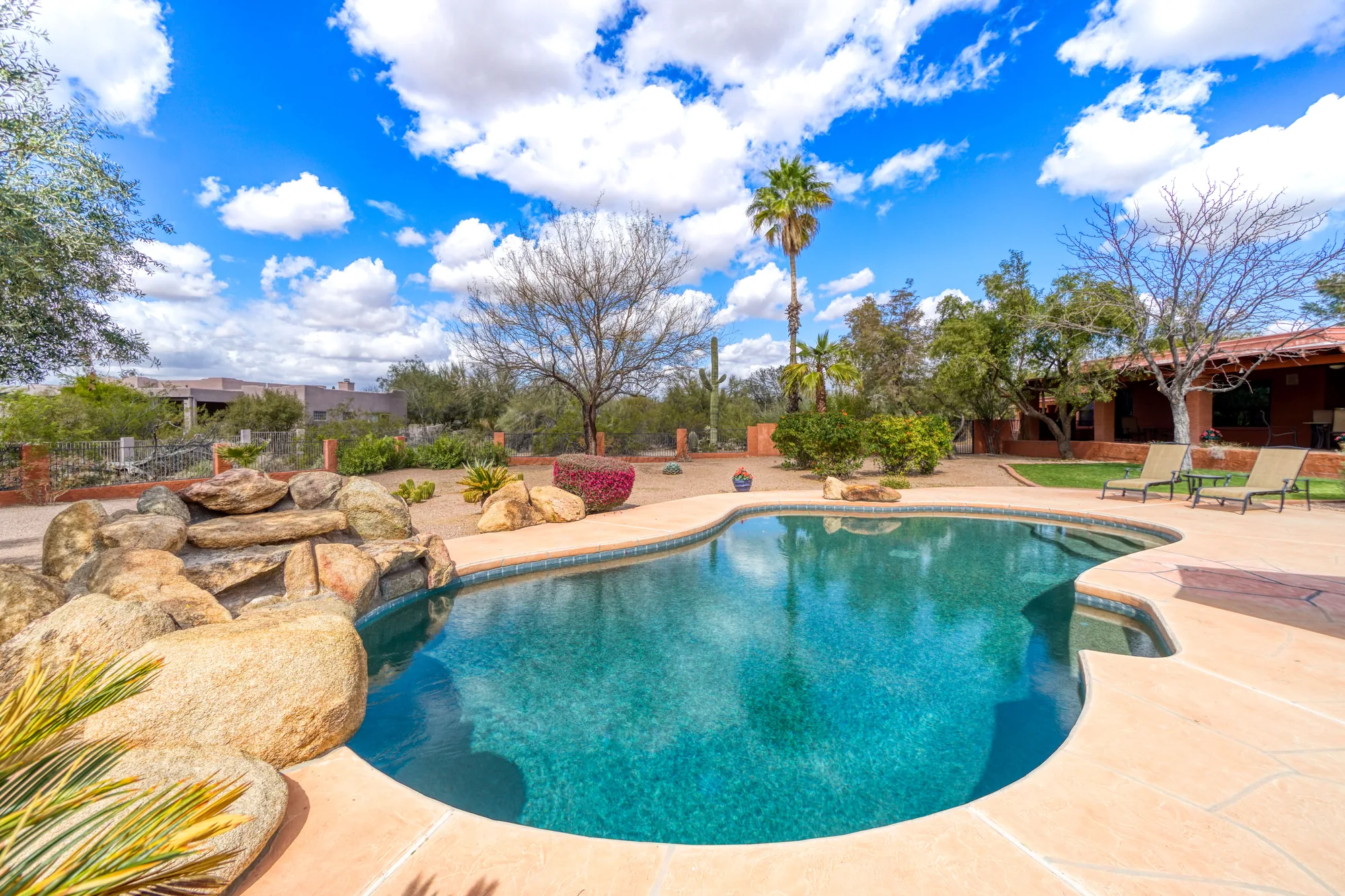
Pool & spa leak detection
Shell, skimmer, light niche, returns and buried plumbing — tested and listened to until the loss has an address.
Pool leak detectionPhoenix, Arizona Family owned Se habla español
Pool, irrigation and slab leak detection across the Phoenix valley — Buckeye to Mesa, Anthem to Chandler.
Pools and spas, irrigation and drip, slab leaks, buried water lines and water mains. We locate it first, so nothing gets opened up on a guess.
A name, a number and one sentence is plenty. A photo of the wet patch or the equipment pad helps even more — text it over.
Why homeowners call us back
Valleywide Leak Detection is owned and run by Inocencio Amaral. When you call, you reach the business — not a dispatch queue. When someone shows up, it is the person who will find your leak.
A Phoenix family business. The name on the truck is the name on the work.
English or Spanish, start to finish — the explanation, the questions, the answers.
Pressure testing, acoustic listening, dye tracing, thermal imaging and line tracing come first. Opening ground is the last step, not the first.
Bonded and insured, and the yard goes back the way we found it before we leave.
Do this first, at home
Before anybody comes out, you can settle the biggest question yourself: is the pool actually losing water, or is it just Phoenix? The trick is to stop comparing your pool to a number on the internet and start comparing it to a bucket sitting in the same weather.
If the auto-fill is topping the pool up, it will hide everything you are about to measure.
Fill the bucket to the same level as the pool and set it on a step so it is in the same sun and the same wind — but do not let it go under the surface.
Mark the water level inside the bucket and the pool level outside it, so you can read both later.
Give it two or three days. If it rains or blows hard, start over — weather ruins the reading.
Same drop in both? That is evaporation, and your pool is fine. Pool dropped further than the bucket? Something is losing water, and that is when to call.
The part most people skip
If more water goes missing while the pump is running, the leak is more likely in the plumbing than in the shell of the pool. If the loss is the same either way, attention moves to the structure, the light, the skimmer and the fittings.
That single answer changes how the whole job is approached — and it is something you can hand us before we arrive.
Your bucket reading tells us whether to arrive set up for pressure testing the lines or for listening and dye-tracing the shell. Either way you have already saved yourself part of the visit.
The myth worth forgetting
The rule of thumb everybody repeats — lose more than a quarter of an inch a day and you have a leak — was not written for a Phoenix summer.
Scottsdale Water publishes month-by-month evaporation figures for an open pool. Worked out per day, June comes to more than a third of an inch, and July is barely behind it. A perfectly sound pool crosses that famous line every single summer.
So the number is not the test. The bucket is the test — your pool against a bucket of water sitting in exactly the same heat, on the same afternoon.
What we look for
Pools and spas first and foremost, then everything else on the property that carries water underground. We find it, show you where it is, and put it right.
Shell, skimmer, light niche, returns and buried plumbing — tested and listened to until the loss has an address.
Pool leak detection
Once the leak is located, the repair is the small part. The opening is only as big as the fix requires.
Pool leak repair
Warm spots, damp flooring, a meter that will not sit still. Post-tension slabs must not be cut without proper assessment, which is exactly why precision matters.
Slab leak detection
Valves, mainlines, drip runs and flood-irrigation pipe — the lines that quietly water nothing at all.
Irrigation leaks
Line tracing and acoustic work across yards, driveways and hardscape, so that when ground is opened, it is opened in the right place.
Underground leaks
The line from the meter to the house. A main losing water shows up on the bill long before it shows up on the surface.
Water main leaks
Most of the water a Valley home uses goes outdoors, which is why an outdoor leak is the easiest one to miss. We work the property until the bill makes sense.
High water bill
Pressure testing, acoustic listening, dye tracing, thermal imaging, line tracing — whichever combination the property calls for.
All leak detectionWorth saying plainly: leak detection and leak repair is all we do. We are not a general plumbing company — no sewer work, no gas lines, no water heaters, no drain cleaning, no fixture or appliance installs. If it is not a leak, we will tell you that too. See all services.
How we actually find it
A leak gives itself away in sound, in pressure, in temperature and in dye. The job is knowing which one to listen to on your property.
What happens
A pool losing water is a slow puzzle. Nothing about it is helped by rushing, and nothing about it needs to be opened up on a hunch. Here is the order we work in.
A picture of the wet patch, the equipment pad or the meter tells us more in one second than a long description does. Send it to the same number.
Pressure testing, listening, dye and thermal work, in whatever order your property calls for. The equipment goes on and off so we can tell shell from plumbing.
You get shown the spot and told what is happening there, in plain English or in Spanish, before anything is opened up.
Most leaks we locate we also repair. If it turns out to be something outside what we do, we say so rather than sell you work.
The leak that hid from everyone
A good share of the work is the leak that did not show itself the first time. Leaks are genuinely hard to find — a careful person can walk a yard and come up empty, because the water is nowhere near where it surfaces.
That is the part we specialise in. Equipment, a method, and the patience to work the property until the water makes sense.
Flood irrigation
If your lot is flood irrigated, this is the single most useful thing to understand about it.
Salt River Project’s responsibility ends at its delivery gate. Once a zanjero opens that gate, the water travels to your property through ditches, channels and pipelines that are owned, operated and maintained by the homeowners themselves — who are also responsible for keeping all of that water on their own property.
Which means the gates, valves, standpipes and buried laterals are private pipe. When one of them is losing water, it is not a call to the utility. It is exactly the kind of call we get.
Flood irrigation runs through some of the Valley’s most established neighbourhoods:
Soils across greater Phoenix commonly hold clay, caliche or other hardpan at fairly shallow depth — another reason to locate a line properly before opening ground on it.
The one nobody warns you about
Several Valley cities work out your sewer charge from how much water you used in winter, then apply that figure to every bill for the next twelve months.
Goodyear uses January, February and March. Peoria runs December through March. So an auto-fill stuck open in February does not just show up that month — it can quietly lift the sewer line on every bill until the following spring. Goodyear’s own guidance tells residents not to fill a pool during those months for exactly this reason.
If your winter water use looked wrong and you never found out why, that is worth a conversation now rather than next summer.
Most of the water a Valley home uses goes outdoors, according to City of Phoenix Water Services. An outdoor leak is therefore both the easiest one to miss and the one it hurts most to leave alone — there is no ceiling under a yard and no damp wall to warn you.
How we work
We find it before anything gets opened up. Locating the leak is the whole job — cutting first and looking afterwards is how a small repair becomes a big one.
You get told what we found in plain language, including when the answer is that your pool is fine and the weather is doing it.
Leak detection and leak repair is all we do. If what you have is not a leak, we will say so rather than sell you something else.
Where we work
Buckeye to Mesa, Anthem to Chandler.
Based on South 36th Drive in Phoenix. Every pin is a place we actually go.
Click a pin for the kind of work that part of the Valley usually needs, and why. Each one is written from that area’s housing age, not from a customer’s file.
What actually happens
Most people have never had to call a leak company before, so here is the whole thing, start to finish, with nothing left vague.
A name, a number and one sentence is enough to start. A photo of the wet patch, the equipment pad or the bill often tells us more than a paragraph does, and you can text one straight to the same number.
For a pool that usually starts with the bucket test, which you can run yourself before anyone drives out. In a Phoenix summer a sound pool loses more than a third of an inch a day to evaporation, so plenty of what looks like a leak is the weather.
Sections get shut off and tested one at a time until the loss stops following the water. That is what rules out the parts of the property that are fine, which is most of it.
Acoustic listening, line tracing, pressure testing, dye and thermal imaging — whichever combination the property calls for. Nothing is opened up until we can put a mark on the ground and say the leak is there.
Where it is, what failed, and why it failed there. In plain language, and in Spanish if that is easier. If your pool turns out to be sound, that is the answer you get.
We repair what we find. If the right answer is that it is somebody else’s trade or that it can be left alone for now, we will tell you that instead.
Where we work
Buckeye to Mesa, Anthem to Chandler.
Based on South 36th Drive in Phoenix, working the metro and the communities around it.
What it costs
A locate is priced by how much has to be ruled out before the leak has an address. That is why an exact figure over the phone is not possible — but the range is, and so is the reason yours might sit at either end of it.
Estimated ranges for the Phoenix market, not a quote — your property decides where in the range it falls, and we will tell you before we come out. Repairs are quoted once the leak is found, because until then nobody knows what is involved.
What moves the price — and why Phoenix is not an expensive market
Catching the next one
None of these need a plumber, and any one of them can find a leak months before it surfaces. Worth doing when a bill looks wrong, and worth doing anyway once a season.
If one of those looks wrong: it is worth a call before it becomes a repair. Start with the bucket test if it is a pool.
Questions we get every week
Very possibly. Scottsdale Water publishes month-by-month evaporation for an open pool, and worked out per day, June comes to more than a third of an inch, with July barely behind. That means a perfectly sound pool crosses the old quarter-inch-a-day rule every summer. Do not judge your pool against a number from the internet — judge it against a bucket of water sitting in the same weather.
Turn the auto-fill off. Stand a bucket on a pool step, filled to the same level as the pool, without letting it go under the surface. Mark the water level inside the bucket and the pool level outside it. Wait two or three days, then compare, starting over if it rains or blows hard. If both dropped the same, that is evaporation and the pool is fine. If the pool dropped further than the bucket, something is losing water.
It matters a great deal, and it is the step most people skip. Run the bucket test once with the equipment on and once with it off. If more water goes missing with the pump running, the leak is more likely in the plumbing than in the shell of the pool. If the loss is the same either way, attention moves to the structure and the fittings. That one answer changes how the job is approached.
Outdoors. Most of the water a Valley home uses goes outdoors, according to City of Phoenix Water Services, which makes an outdoor leak both the easiest one to miss and the one it hurts most to leave alone. Irrigation, drip lines, a pool auto-fill and the buried service line are all capable of losing water for months without a single damp wall to warn you.
Yes. Salt River Project’s responsibility ends at its delivery gate. Once a zanjero opens that gate, the water reaches your property through ditches, channels and pipelines owned, operated and maintained by the homeowners themselves, who are also responsible for containing that water on their own property. So the gates, valves, standpipes and buried laterals are private pipe, and they are exactly the sort of thing we get called out to — in Arcadia, the Biltmore area, parts of Tempe and Mesa, and much of Laveen.
In some Valley cities, yes. Several set the sewer charge from winter water use and then apply that figure for the following twelve months — Goodyear uses January, February and March, and Peoria runs December through March. A pool auto-fill stuck open in February can quietly raise the sewer line on every bill until the next spring. Goodyear’s own guidance tells residents not to fill a pool in those months for exactly that reason.
Please do not count on it, and we will never promise it. Leak adjustments are rarer than people assume. Of the Valley providers we checked, Cave Creek was the one publishing a policy we could verify. Phoenix, Glendale, Chandler, Tolleson and EPCOR were each checked and do not publish one. Ask your own provider directly — and either way, the water stops going to waste the day the leak is fixed.
We locate before we dig. Pressure testing, acoustic listening, dye tracing, thermal imaging and line tracing come first, so that when something is opened, it is opened in one place for a reason. This matters especially indoors: a post-tension slab must not be cut without proper assessment, which is precisely why pinpointing a slab leak accurately is the whole job.
It is, and it is a large part of what we do. Leaks are genuinely hard to find — a slow one in a buried line can hide from a careful, competent technician. We come at it methodically: bucket result first, equipment on against equipment off, then pressure testing and listening until the loss has a location we can show you.
Valleywide Leak Detection is family owned and operated by Inocencio Amaral, so you talk to the person who does the work rather than a call centre. Se habla español — the whole conversation can happen in Spanish or in English. We are bonded and insured, and we leave the yard the way we found it.
We would rather be honest than make a promise we cannot keep, so we do not publish arrival windows. Call or text and we will tell you truthfully when we can get to you. In the meantime, the bucket test is something you can start today, and the result will make the visit shorter.
Start here
A photo of the pool, the equipment pad, the meter or the damp spot is the fastest way to get a real answer. Text it to the same number you would call — it goes straight to the person who will be doing the work.
Leave a name, a number and one line about what the water is doing. That is all we need to get going.
Go to the formWhat customers in the Phoenix valley have written. The words are theirs, on listings we cannot edit.
“Humberto has been amazing! Prompt, professional, and patient. He has gone above and beyond, taking the time to show me how to operate the water valves and educating me so I can continue to monitor for future leaks. He identified multiple leaks and made thoughtful recommendations.”
“Beto was very professional, thorough and patient in explaining everything he was doing and why. It was an excellent and well worth it experience, and this is saying something for an architect who had a hundred questions!”
“The owner and operator of this company is everything a contractor should be. On time, honest, competent, reachable, comprehensive. Hope to work with him again in the future.”