
Apartments & multi-family
One master meter, many identical units, consumption that moved.
Apartments & multi-familyCommercial & multi-property
Pools and spas, irrigation, slab leaks and buried supply lines on apartment communities, HOAs, offices, restaurants, retail centers, campuses and resort pools across the Valley.
What actually changes
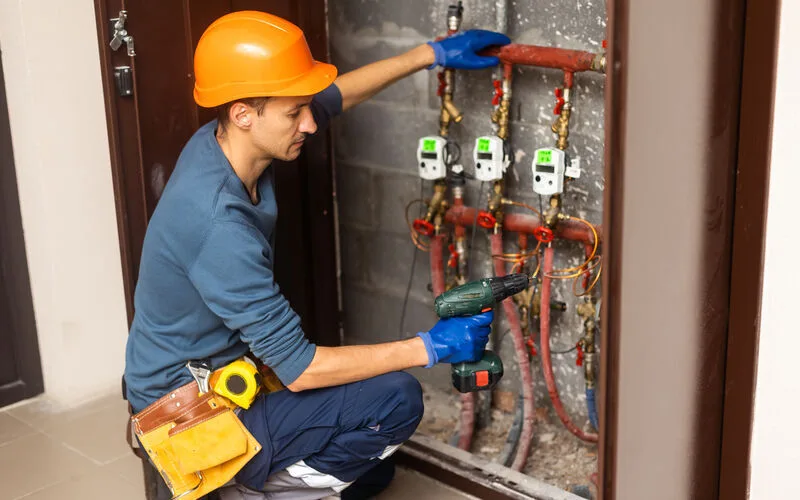
Water behaves the same way under an apartment building as it does under a house. Everything around it is different. Somebody has to authorise the work. Something has to stay open while we are there. And afterwards the person who signed has to explain to an owner or a board why it was necessary.
The pages below answer them for a building like yours.
Scope, stated plainly
Commercial readers reasonably assume a wider scope than a homeowner does, so it is worth being exact. We are a leak detection and leak repair business: water under pressure, and water in a pool.
Those belong with your plumbing contractor, and we will say plainly if that is what you have.
Method
Several buildings, one or two meters and a wet patch somewhere is not a detection problem yet. It becomes one once the site has been divided up.
A master-meter dial still turning with the site idle is the first hard fact of the job, and nothing gets opened up to obtain.
Irrigation from domestic, building from building — then verify what each valve really shuts off, because the tag and the reality often disagree.
It is usually the longest buried run on the property and the easiest section to isolate, so ruling it in or out removes most of the map.
Each section that holds is eliminated, and the fact that it was tested and held goes in the report.
Acoustic listening, line tracing and thermal imaging narrow it to a point on the ground rather than a pipe run to go looking along.
A locate that exists only in somebody's head cannot be checked later, so the mark goes into a photograph before anything is cut.
On site
If the property has an on-site maintenance lead we start with them. They know which valve was replaced, which building floods when a riser is shut, and where the irrigation was re-routed. We work from their valve map and hand it back better annotated than we found it.
The paperwork
A commercial locate is half finished when the leak is found. The other half is a document somebody can forward — same information, same order, every visit:
By property type
One master meter, many identical units, consumption that moved.
Apartments & multi-family

A portfolio: scattered addresses, tenant access, owner approval.
Property management

Under-slab supply beneath a kitchen that cannot close.
Restaurants & food service


Where we work
Based on South 36th Drive in Phoenix. Home page for houses.
Straight answers
Usually not. Meter readings, listening and thermal imaging happen with everything running as normal; only a pressure test on one isolated section needs water off.
At the meter with the site idle, then by splitting the site on the valves already in the ground. Irrigation comes out first, and each section that holds is eliminated in writing.
That is how we prefer to work. Your maintenance lead knows the valve history, so we work from their map and add what we learn to it.
No. We are leak detection and leak repair: pools and spas, irrigation, slab, buried supply lines and water mains. Everything else goes to your plumbing contractor.
A photo of the wet patch, the equipment pad or the meter is usually enough to start.
What customers in the Phoenix valley have written. The words are theirs, on listings we cannot edit.
“Humberto has been amazing! Prompt, professional, and patient. He has gone above and beyond, taking the time to show me how to operate the water valves and educating me so I can continue to monitor for future leaks. He identified multiple leaks and made thoughtful recommendations.”
“Beto was very professional, thorough and patient in explaining everything he was doing and why. It was an excellent and well worth it experience, and this is saying something for an architect who had a hundred questions!”
“The owner and operator of this company is everything a contractor should be. On time, honest, competent, reachable, comprehensive. Hope to work with him again in the future.”